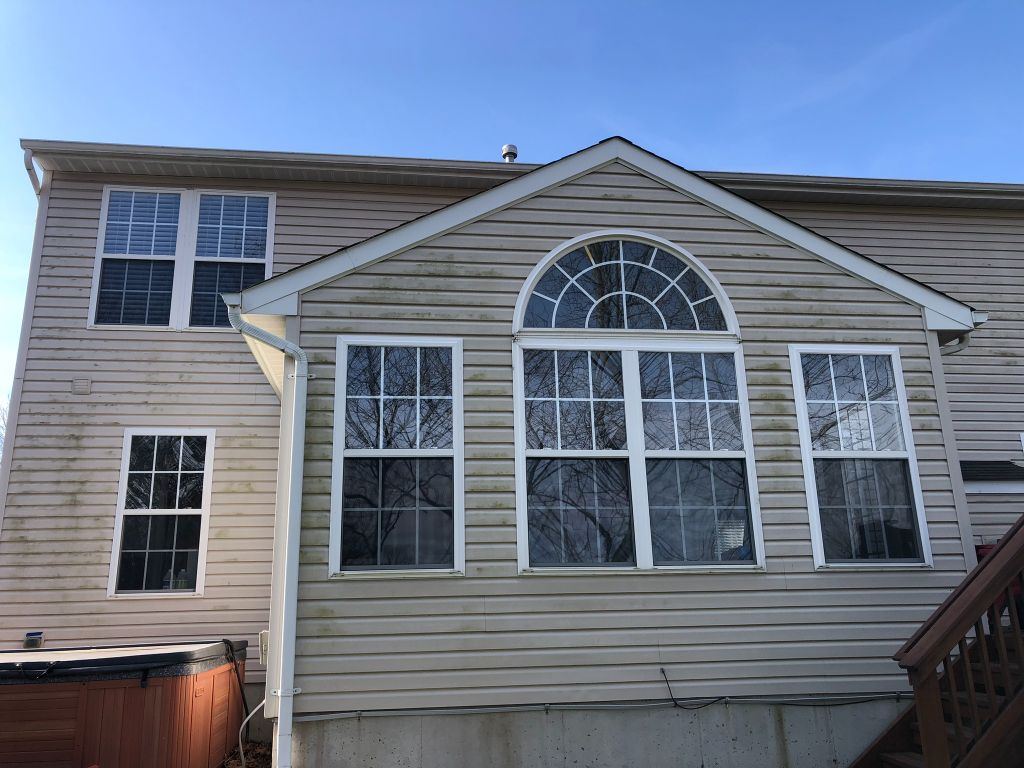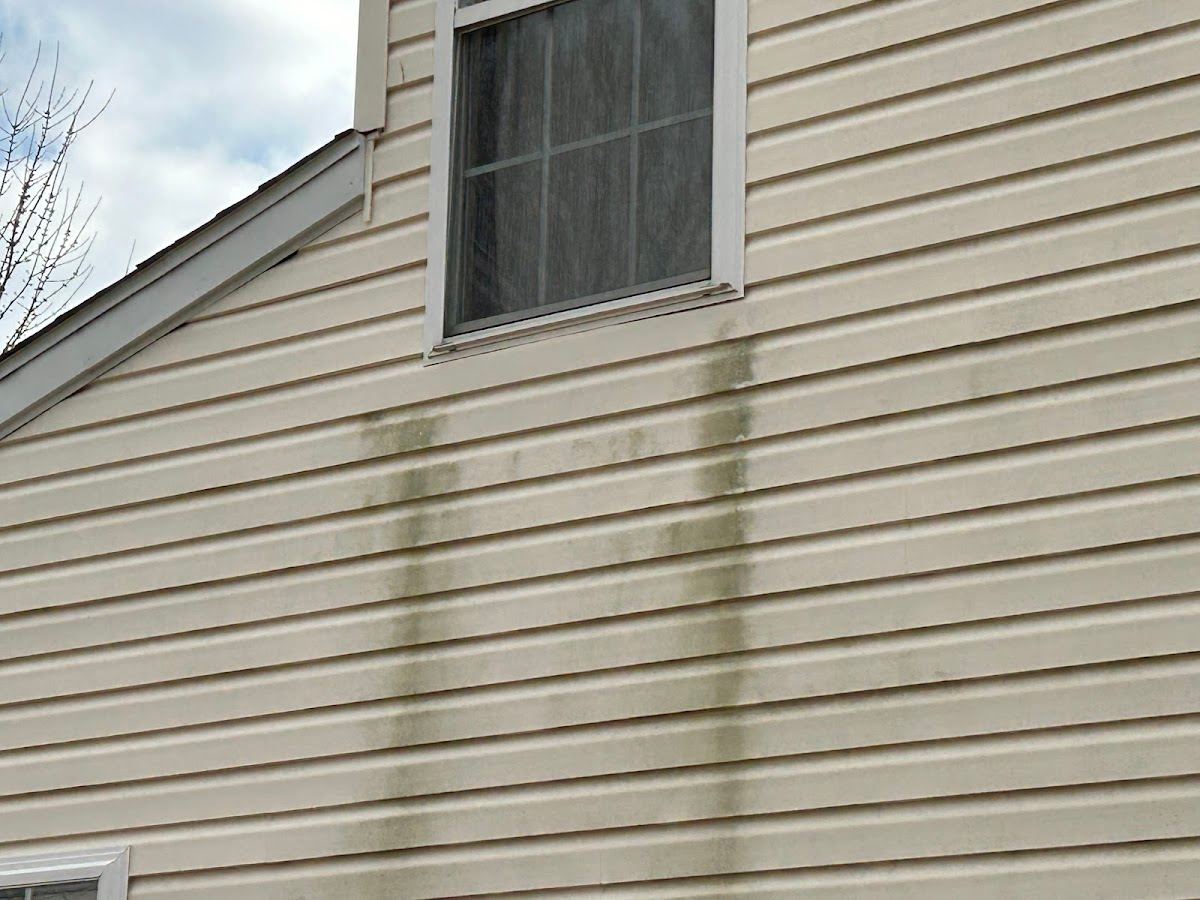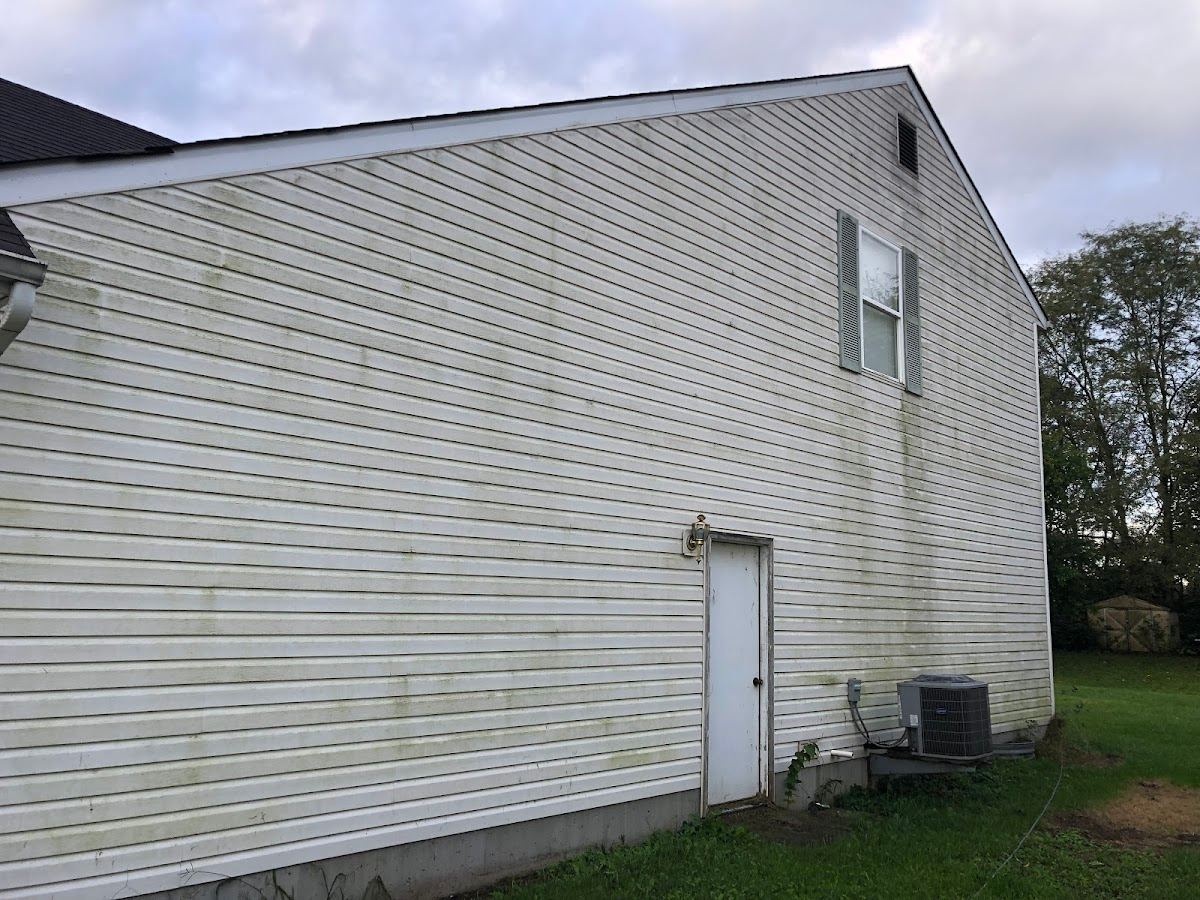
You wash the car, mow the lawn, keep the porch swept. Then one morning you back out of the driveway, look up, and the north side of your house has gone green. Streaky, dull, a little fuzzy in the shade. It seems to have shown up overnight, and it makes a well-kept home look neglected.
It is not dirt, and it is not your fault. That green is algae, and in Ohio it is practically a season unto itself. The good news: it comes off, and it comes off cleanly when the siding is treated the right way. Here is why green algae siding Ohio homeowners deal with every year keeps coming back, and how to get rid of it without damaging your home.
What That Green Stuff Actually Is
Most homeowners call it mold or mildew. Usually it is neither. The green film spreading across vinyl, fiber cement, aluminum, and even brick is a type of algae, most often Gloeocapsa magma and its relatives. It is a living organism. It feeds on moisture, airborne dust, pollen, and the residue that collects on any outdoor surface.
Algae is not the same as the black streaking you see on roofs, though they are cousins and often show up together. On siding it reads as green, sometimes with a grayish or blackish edge where mildew has joined the party. Left alone it spreads outward in patches, then knits together into a solid sheet.
The thing to understand is that it is alive. That changes how you remove it. You are not scrubbing off a stain. You are killing an organism and rinsing away what is left. Skip the killing step and it grows right back, often within weeks.
Why Ohio Homes Are Algae Magnets
Some climates barely see this problem. Ohio is not one of them. Our weather gives algae nearly everything it wants for most of the year.
Start with humidity. Ohio summers are warm and wet. That moisture clings to shaded siding and never fully dries, which is exactly the damp, stable environment algae needs to take hold. Then add the rest of our calendar:
- Spring pollen. The yellow-green dust that coats everything in April and May is food. It settles into the texture of your siding and feeds the first bloom of the year.
- Fall leaves. Decaying organic matter against the house, plus the shade from trees that drop them, keeps walls cool and wet well into November.
- Freeze-thaw winters. Repeated freezing and thawing works grime deeper into surface texture and opens up tiny spots where moisture and spores settle in.
- Road salt. Salt spray from winter roads draws and holds moisture on lower siding, which is why the bottom courses near a busy street often green up first.
Put it together and an Ohio home spends a big chunk of the year in conditions algae loves. It is not a sign you have done anything wrong. It is just our climate doing what it does.
The North Side Always Goes First
Walk your house and you will almost always find the worst growth on the north and east faces. There is a simple reason. Those walls get the least direct sun, so they stay damp the longest after rain, dew, and snowmelt.
Anywhere that holds moisture is a candidate. Behind downspouts. Under wide eaves. Along walls shaded by a fence, a neighbor's house, or a row of arborvitae. Lower courses near garden beds where sprinklers hit. Spots where gutters overflow and keep a strip of siding wet.
If you want less algae long term, look at what is keeping those areas wet. Trimming back shrubs so air can move, redirecting a downspout, and fixing a leaky gutter all help. None of it removes algae that is already there, but it slows how fast the green comes back after a proper cleaning.
Why Pressure Alone Is the Wrong Tool
The instinct is to rent a pressure washer, crank it up, and blast the green away. On siding, that is a mistake that can cost you far more than the algae ever would.
High pressure aimed at siding can crack and chip vinyl, dent aluminum, and etch fiber cement. Worse, it drives water behind the panels and into the wall assembly, where it has no easy way out. Trapped moisture leads to rot, mold inside the wall, and ruined insulation. People also strip paint, gouge wood trim, and shatter the seals on windows this way.
And here is the part that stings: blasting algae off with pressure does not kill it. You knock the visible growth loose, but the organism and its roots are still there. Within a few weeks it is back, and you are out a rental fee with a fresh stripe of green for your trouble. Pressure moves the symptom. It does not treat the cause.
Soft Washing: How the Pros Actually Remove It
The right method is soft washing. Instead of relying on force, soft washing relies on a surface-safe cleaning solution that kills the algae at the root, then rinses everything away under low pressure that will not harm your home.
Done correctly, the process looks like this. We apply a cleaning solution formulated to kill algae, mold, and mildew. We let it dwell so it can actually do its work down to the organism, not just the surface. Then we rinse with low pressure. The green is gone, and because the algae has been killed rather than knocked loose, the results last far longer than any quick blast.
This is the standard, careful approach behind our soft washing and broader house washing work. It is the same method that makes vinyl siding cleaning safe, since vinyl is exactly the kind of surface that high pressure damages and low-pressure soft washing protects. The walls come back to their real color, the algae is dead, and nothing about your siding, trim, or windows gets beat up in the process.
What About a DIY Cleaning?
Plenty of Ohio homeowners want to try it themselves first, and for a small, reachable area on a single-story home, a careful DIY pass can help. If you go that route, keep a few things in mind.
- Skip the gas pressure washer on siding. If you must use one, keep it on a wide low-pressure tip, hold it well back, and never aim up under the laps where water can get behind the panels.
- Use a cleaning solution that kills algae, not just soap that smears it around. Soap rinses the surface but leaves the organism alive.
- Protect what is below. Pre-wet and rinse plants, and avoid letting runoff pool against the foundation.
- Stay off ladders for the high stuff. The worst growth is usually up under the eaves and on second stories, and that is where most weekend cleanings turn into emergency-room visits.
Where DIY falls short is reach, safety, and staying power. Two-story walls, steep grades, and the shaded upper courses are hard to treat well from the ground, and a solution that is too weak or rinsed too soon means the green is back by midsummer. If the growth is widespread or up high, it is worth bringing in someone who does this every day.
How Often Ohio Siding Needs Cleaning
For most homes along the I-75 corridor, a yearly cleaning keeps siding ahead of the algae. Heavily shaded houses, lots backed up to woods, and homes near water or a wet, north-facing slope may want it more like every nine to twelve months, because they simply stay damp longer.
Timing matters too. Late spring through early fall is ideal in our climate. You are clearing out the pollen bloom and the summer humidity growth, and you are doing it while temperatures let the cleaning solution work and the walls dry out properly afterward. A clean wall heading into our freeze-thaw winter also gives algae less of a foothold to start the next year.
One more practical note. Regular cleaning is not only about looks. Algae holds moisture against the surface, and constant dampness is hard on caulk, paint, and the siding itself over time. Keeping it clean is part of keeping the house sound.
Get a Free Look at Your Siding
If the green has crept across your walls, you do not have to live with it and you do not have to risk wrecking your siding to fix it. We are Redhead Pressure Cleaning LLC, based in Springboro and serving the I-75 corridor from Dayton to Cincinnati, out to Beavercreek, and across Ohio. We are licensed and insured, our work is surface-safe and soft-wash from start to finish, and we treat your home as our own.
Want to know exactly what your house needs? We offer free estimates. Call or text us at (351) 242-0666 and we will take a look, tell you straight what we see, and get your siding back to the color it is supposed to be.